


Why Industrial Air Compressors Are Essential for Automation Systems
Industries across manufacturing, pharmaceuticals, chemicals, food processing, and automotive sectors are rapidly adopting automation to improve productivity, accuracy, and operational efficiency. Behind many of these automated systems is one critical technology — industrial air compressors.
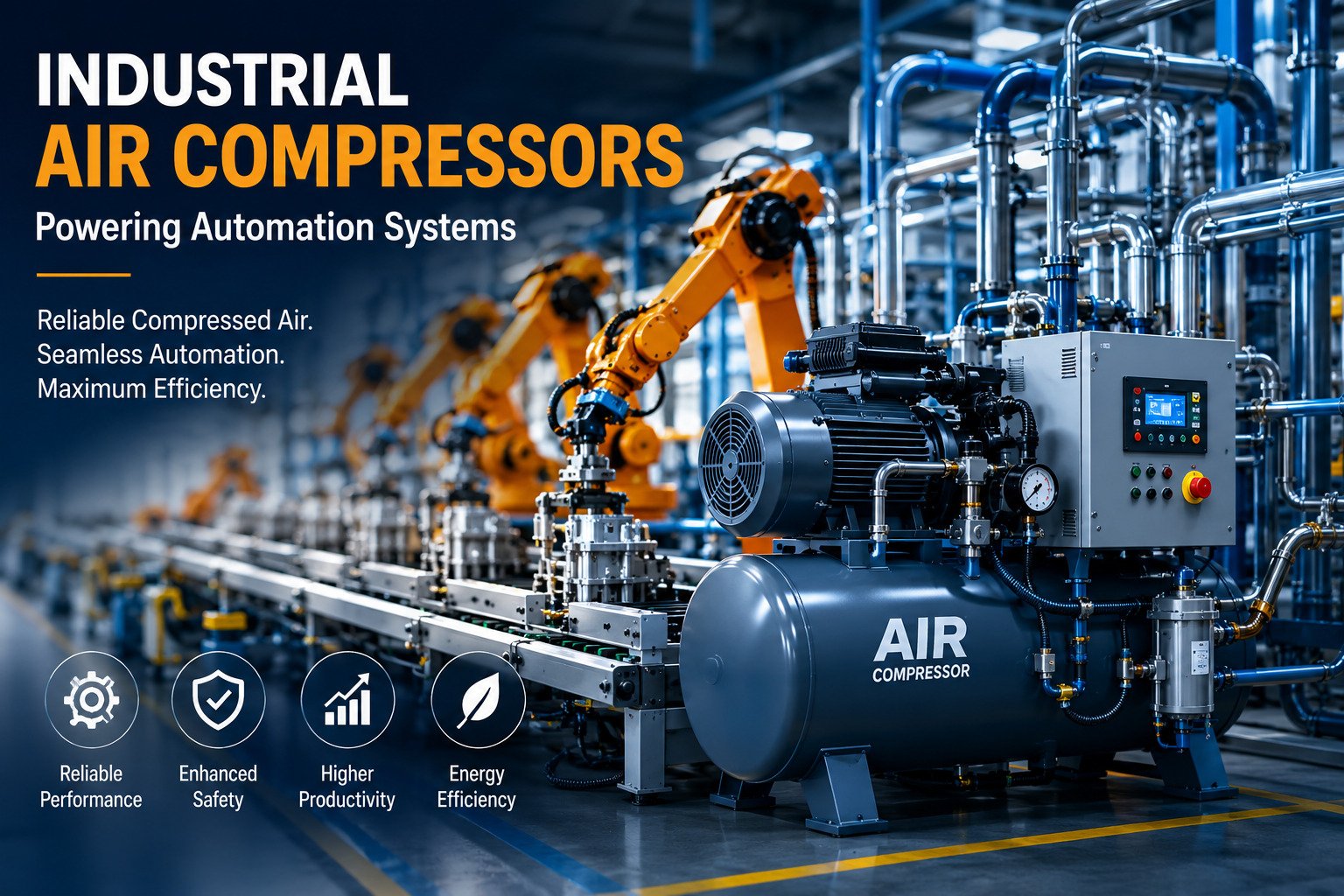
Industrial air compressors power pneumatic tools, automated machinery, robotic systems, and process control equipment that keep production lines running smoothly. As industries continue moving toward smart manufacturing and Industry 4.0, the demand for reliable compressed air systems is increasing significantly.
Understanding Industrial Air Compressors in Automation
Compressed air systems convert power into stored air energy, which is then used to operate a wide range of industrial applications. In automation systems, this compressed air drives pneumatic cylinders, actuators, valves, conveyors, robotic arms, and packaging equipment.
Compressed air is often called the “fourth utility” in manufacturing because it is widely used alongside electricity, water, and gas in industrial facilities.
Automation systems depend on continuous and stable airflow to maintain smooth production operations and minimize downtime.
Why Automation Systems Depend on Industrial Air Compressors
Reliable Power for Pneumatic Equipment
Many automated industrial systems rely on pneumatic technology because it is efficient, durable, and easy to maintain. Industrial air compressors provide consistent airflow that helps automated production lines operate without interruptions.
Industries such as pharmaceuticals, chemicals, and food processing use compressed air systems for precision control, automated packaging, and material handling applications.
Improved Production Efficiency
Automation aims to enhance speed, consistency, and overall operational performance. Industrial air compressors support these goals by enabling faster machine operation and continuous workflow.
Compressed air systems can operate multiple machines simultaneously, helping industries increase production output while reducing delays and manual intervention.
Modern compressor technologies also help optimize energy usage, allowing industries to improve efficiency while lowering operational costs.
Enhanced Industrial Safety
Safety is another major advantage of pneumatic automation systems powered by compressed air.
Unlike some electrical systems, pneumatic systems are safer in hazardous industrial environments where flammable gases, chemicals, or dust may be present. This makes industrial air compressors highly valuable in:
- Chemical plants
- Pharmaceutical industries
- Food processing facilities
- Petrochemical sectors
- Automotive manufacturing units
Automation also reduces direct human interaction with dangerous machinery, improving workplace safety and reducing accident risks.
Supporting Industry 4.0 and Smart Manufacturing
Modern industrial air compressors are becoming smarter with the integration of AI, IoT, and predictive maintenance technologies.
Advanced compressor systems now offer:
- Real-time performance monitoring
- Predictive maintenance alerts
- Remote system management
- Energy consumption tracking
- Automated pressure control
These smart features help industries reduce unexpected downtime, improve operational efficiency, and optimize maintenance schedules.
As industries adopt Industry 4.0 technologies, intelligent compressed air systems are becoming essential for smart manufacturing environments.
Energy Efficiency and Cost Savings
Improving energy efficiency has become a key focus for industrial facilities. Since compressed air systems are widely used in automation, energy-efficient compressors can significantly reduce electricity consumption.
Modern industrial air compressors now include:
- Variable speed drive (VSD) technology
- Smart load control systems
- Leak detection systems
- High-efficiency motors
- Energy recovery technologies
These innovations enable industries to reduce energy waste, cut maintenance costs, and achieve better long-term operational savings.
Versatility Across Multiple Industries
Industrial air compressors support a wide range of automation applications, including:
- Conveyor systems
- Packaging and filling machines
- Robotic assembly lines
- Pneumatic tools
- Industrial spraying systems
- Material handling equipment
- Process instrumentation
Their flexibility makes them essential for both small manufacturing units and large-scale process industries.
Reduced Downtime and Better Reliability
Unexpected equipment failures can impact productivity and raise operational costs. Modern compressed air systems are built for continuous operation with minimal downtime.
Many advanced systems now use predictive maintenance technology to detect performance issues early, helping industries avoid sudden production stoppages.
Reliable compressed air systems are particularly critical in industries that run continuously, such as steel, cement, chemicals, and pharmaceuticals.
The Future of Industrial Air Compressors
As industrial automation continues to advance, industrial air compressors are becoming more intelligent, connected, and energy-efficient.
Future trends may include:
- AI-based compressor optimization
- Cloud-connected monitoring systems
- Fully automated energy management
- Smart factory integration
- Sustainable compressor technologies
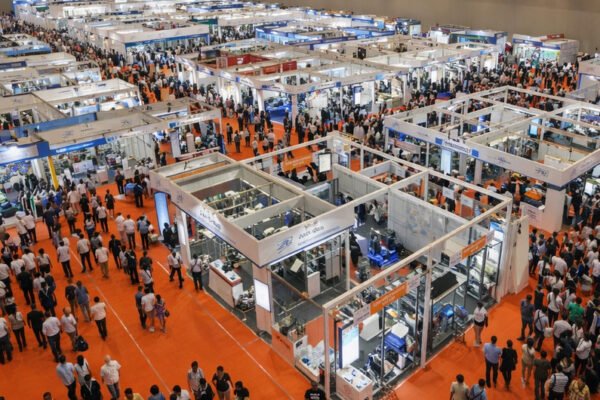
At industrial events like IPEC Expo, automation systems, industrial compressors, and smart manufacturing technologies continue gaining strong attention across process industries.
Conclusion
Industrial air compressors have become a vital part of modern automation systems. They help industries improve productivity, safety, energy efficiency, and operational reliability while supporting smart manufacturing goals.
As automation adoption continues growing across industries, investing in advanced compressed air systems is becoming essential for businesses looking to stay competitive in the future of manufacturing.