


Types of Fire Detection Systems for Industrial Plants, Warehouses & Factories
Fire safety is one of the most critical aspects of industrial operations. In places like factories, warehouses, and process plants, even a small fire can lead to major equipment damage, production loss, and serious safety risks. That’s why choosing the right fire detection system is essential for early warning and rapid response.
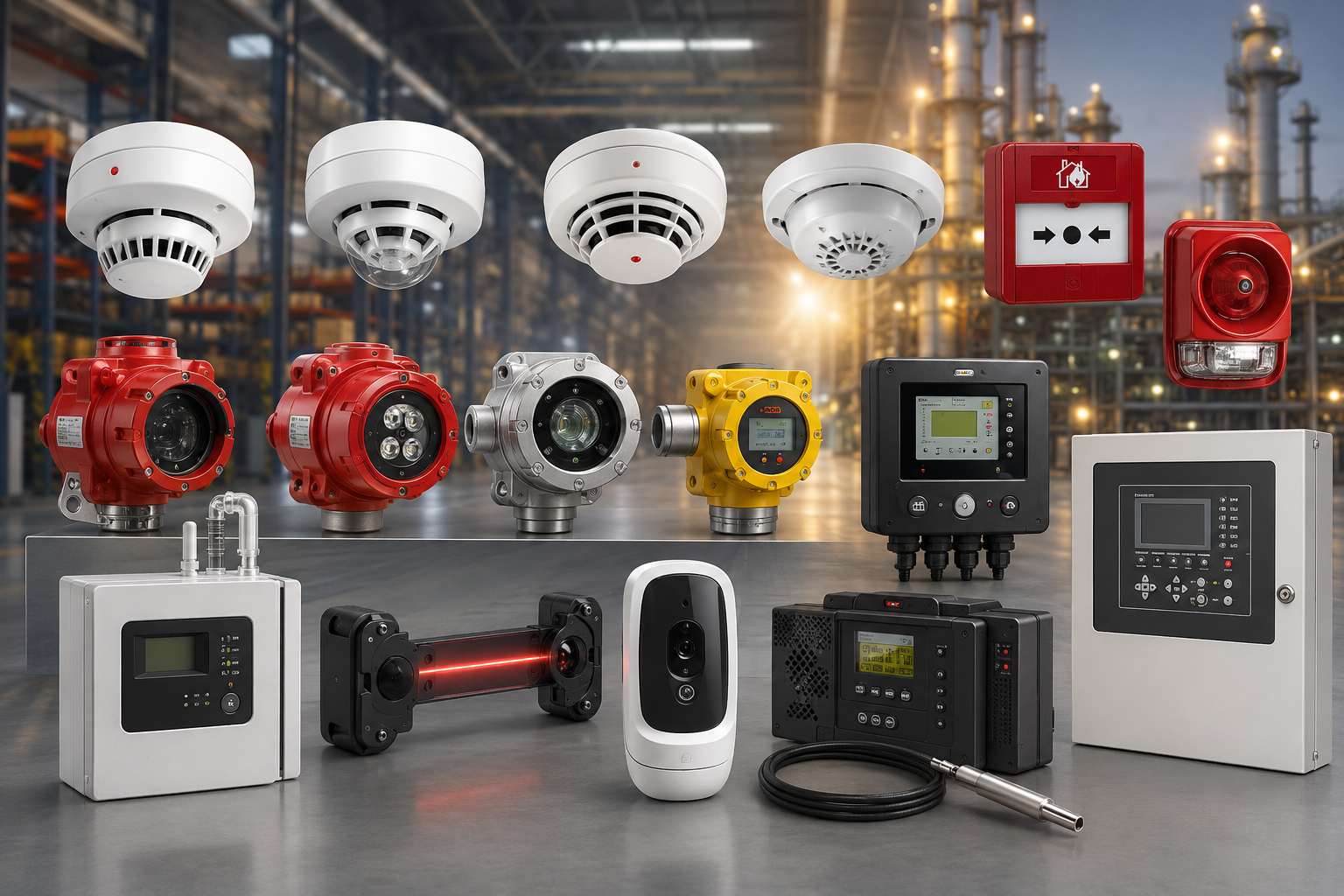
Different industrial environments require different detection technologies. Let’s explore the types of fire detection systems for industrial plants, warehouses & factories and understand how each one works.
1. Smoke Detection Systems
Smoke detection systems are the most commonly used fire detection method. They identify fire at an early stage by sensing smoke particles in the air.
Types of smoke detectors:
- Ionization smoke detectors – detect fast-flaming fires
- Photoelectric smoke detectors – identify slow-burning, smoldering fires
Best suited for:
- Office areas in industrial plants
- Control rooms
- Storage areas with low dust levels
Key benefit:
Early warning before flames appear, helping prevent major damage.
2. Heat Detection Systems
Heat detectors respond to a rise in temperature rather than smoke. They are more suitable for harsh environments where smoke detectors may fail.
Types of heat detectors:
- Fixed temperature detectors – trigger when a specific temperature is reached
- Rate-of-rise detectors – trigger when temperature increases rapidly
Best suited for:
- Manufacturing units
- Boiler rooms
- Chemical plants
- High-dust or high-fume areas
Key benefit:
Highly reliable in environments with smoke, dust, or steam.
3. Flame Detection Systems
Flame detectors identify fire by sensing infrared (IR), ultraviolet (UV), or both types of radiation emitted by flames.
Types:
- UV flame detectors
- IR flame detectors
- UV/IR combined detectors
Best suited for:
- Oil & gas industries
- Chemical processing units
- Fuel storage areas
- Industrial furnaces
Key benefit:
Extremely fast detection of open flames, even before smoke builds up.
4. Gas-Based Fire Detection Systems
These systems detect combustible or toxic gases that are often released before a fire outbreak.
Common gases detected:
- Carbon monoxide (CO)
- Methane (CH₄)
- Hydrogen (H₂)
Best suited for:
- Chemical industries
- Paint manufacturing units
- Refineries
- Warehouses storing flammable materials
Key benefit:
Prevents fire before ignition by detecting gas leaks early.
5. Aspirating Smoke Detection (ASD) Systems
ASD systems are highly sensitive fire detection systems that actively draw air samples through a pipe network and analyze them for smoke particles.
Best suited for:
- Data centers
- Cold storage warehouses
- High-value manufacturing plants
- Clean rooms
Key benefit:
Detects fire at the earliest possible stage (even invisible smoke particles).
6. Beam Smoke Detection Systems
Beam detectors use a projected infrared beam between a transmitter and receiver to detect smoke interruption.
Best suited for:
- Large warehouses
- Industrial sheds
- Airports and logistics hubs
- High-ceiling factories
Key benefit:
Covers large open spaces with fewer detectors, making it cost-effective.
7. Multi-Sensor Fire Detection Systems
Multi-sensor systems combine smoke, heat, and sometimes gas detection in one device to improve accuracy and reduce false alarms.
Best suited for:
- Modern smart factories
- Automated production units
- Industrial control environments
Key benefit:
High accuracy with minimal false alarms.
8. Flame + Gas Integrated Safety Systems (Advanced Industrial Setup)
In high-risk industries, integrated systems combine flame detectors, gas detectors, and automated alarm suppression systems.
Best suited for:
- Oil refineries
- Petrochemical plants
- Large-scale industrial zones
Key benefit:
Provides complete fire risk monitoring and automatic response capability.
How to Choose the Right Fire Detection System?
Selecting the right system depends on several factors:
- Type of industry
- Fire risk level (low, medium, high)
- Environmental conditions (dust, heat, chemicals)
- Size of facility
- Regulatory safety requirements
A combination of systems is often the most effective approach for industrial safety.
Conclusion
Fire detection systems are not one-size-fits-all. Industrial plants, warehouses, and factories require a carefully planned combination of technologies to ensure maximum safety and early fire detection.
From basic smoke detectors to advanced aspirating and flame detection systems, each solution plays a vital role in preventing disasters and protecting lives, assets, and operations.
Investing in the right fire detection system is not just a compliance requirement—it’s a long-term safety strategy for any industrial facility.